Massachusetts School Library Association
Member Portal:
​Join/Renew/Directory
​
  • Home
    • Spotlight Archive
    • MSLA Constitution
    • About Us
  • Membership
  • Conference
  • Resources
  • Advocacy
  • Awards
    • Judi Paradis Memorial Grant
    • MSLA Awards Archive: History of Awards >
      • 2023 Awards Pictures
      • 2019 Awards Pictures
      • 2018 Awards Pictures
      • 2017 Awards Pictures
      • 2016 Awards Pictures
      • 2015 Awards Pictures
  • Bookmark Contest

To Tweet or Not to Tweet: That Is the Question

2/27/2018

0 Comments

 
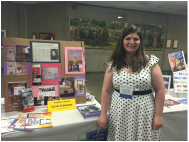
Emily L. Warner is the Library Director at Notre Dame Academy in Hingham
​and received a 2017 Web Seal of Excellence. 

Today, various social media platforms are powerful tools which are used for many reasons: to connect with others, promote certain messages, and to bring social groups together being just a few. Most teenagers and young people today use social media platforms of all kinds for these reasons, to see what others are doing, and in some unfortunate cases, for negative purposes. Over the last year, Twitter has become even more popular, and often controversial, due to its prominence in our most recent Presidential election and in our current President’s first term in office.


On many levels, Twitter can be a great tool to use for promoting one’s agenda, speaking directly to one’s audience. However, one must be careful when using any social media, as it has the potential to cause trouble. In this article, I will be looking at how I use Twitter to promote my school library, various school-wide activities, and even provide a few messages of motivation! I am able to reach out to a wide and varied audience, especially tweens and young adults, as well as our faculty, staff, parents, and beyond.
Read More
0 Comments

Tech Column: Evaluating Your Ebooks, Why More Tech Isn’t Always the Answer

10/17/2017

5 Comments

 
Margaret Schoen is a Library Teacher at Newton South High School
​ and received a 2017 Web Seal of Excellence.
​
Over the past few years, our team has been evaluating ebook platforms, readership, and purchasing as part of our professional goal. We’ve conducted surveys, run promotions, tested multiple platforms and compared costs. And we’ve come to what might be considered an unexpected conclusion: for our school, and our readers, more tech was not the answer. After all that analysis, we decided to cut back on our ebook platforms to get the most bang for our buck.
​

There were many steps on our journey. First up was simply to measure awareness. We had ebooks, but did students and faculty know it? For students who were using ebooks, what platforms were they using, what technology? We needed this data to decide how to move forward.

Read More
5 Comments

Ignite Talk: Giving students a voice with Touchcast

10/17/2017

0 Comments

 
Laura Gardner is the Teacher Librarian at Dartmouth Middle School
One of the rules of an Ignite talk is to NOT talk about one tool and from my title it looks like I’m breaking that rule. We librarians are such rebels, aren’t we?

Over the last three years, the teachers and students in my school have created over 500 videos with our green screens and the free iPad app, Touchcast. We have four green screens in our library, three others around the school in classrooms and countless green tablecloths that go up in hallways and classrooms when we’re doing a big project. Several teachers now have their own channels. Some students even create their own videos at home, for extracurricular projects and of course, just for fun. This has fundamentally changed our school. The specific app isn’t what matters; it probably could have been any app. However, I do think Touchcast is the very best choice; not only for student projects, but also for flipping your classroom, school news shows and MakerSpace-style video creation. It is easy and fun to create videos that promote future ready libraries for every school. You can include video apps including polls, quotes, and pop-up images as evidence, all the while using green screens to create backgrounds such as news shows and of course, school libraries.

Read More
0 Comments

Tech Column: Making the Switch to NoodleTools

5/23/2017

4 Comments

 
Margaret Schoen is a Library Teacher at Newton South High School
Our school system signed up for a new citation tool this year, NoodleTools. It’s been an interesting year as we’ve tried to convince our teachers to climb on board with a new tool while discovering its features and surprises ourselves.
​

Switching over to a new system was not entirely a choice - the company we had previously been working with was purchased, and we needed to find a new solution fast. So when we signed on to NoodleTools we knew we were getting something that did the basics of citations, but we’ve also discovered some tools and tricks that have been especially useful to our students.

Read More
4 Comments

Future Ready Librarians

10/15/2016

0 Comments

 
Reba Tierney is the librarian at the Jeremiah E. Burke High School in Dorchester, MA ​
Attending ALA is always intense, but attending ALA as an AASL Affiliate Assembly representative for the New England region brought that intensity to another level! Yet, it was a good intensity, as it gave me the invaluable opportunity to work with school librarians from around the country. During one of the AASL Affiliate Assembly sessions, the Future Ready movement was brought up and discussed. At the time, I had not even heard of Future Ready, but it quickly became evident that this was something for school librarians to be excited about. According to the Twitter account for Future Ready, it is defined as developing the capacity to transform teaching & personalize learning using digital tools. The Future Ready Schools website states that the plan helps district leaders plan and implement personalized, research-based digital learning strategies so all students can achieve their full potential. But what does all this mean? And even more importantly, what does it mean for school librarians?

Read More
0 Comments

Digital Citizenship at Burlington High School

10/15/2016

2 Comments

 
Jennifer Scheffer, formerly ITS at Burlington High school, currently at Fox Hill Elementary
As Burlington High School embarks on its sixth year as an Apple Distinguished, 1:1 iPad school, all students, beginning with the class of 2019, will be required to take a Digital Citizenship course as part of their graduation requirements. This pass/fail, one credit course is entirely online and is self-paced. Students have until the end of May of the current school year to complete the course; providing them with flexibility in terms of completing assignments. Because Burlington is a Google Apps for Education school, all assignments are distributed and collected through Google Classroom. Google Classroom was chosen for its intuitiveness and the fact that it integrates seamlessly with Google Forms. Google Forms was selected for each assessment in the course because of its quiz feature with automatic grading.  ​

Read More
2 Comments

Librarian as Technology Leader

5/7/2016

0 Comments

 
Picture


Carrie Grimshaw is the Library Media Specialist at Leicester High School
and the recipient of a 2016 President's Award


As a Library Media Specialist for Leicester High School, I make myself invaluable to faculty, staff, and students by constantly striving to improve my school library program by being on the forefront of technology.  As a technology leader in my high school, I attend workshops and teach best practices to faculty about Chromebooks and library updates, teach research database lessons to students, and create a fun place with interactive displays and makerspaces where students can hang out.  Technology is a huge part of what school libraries are now and technology needs to be embraced in order for your school library to remain hub of your school community.  

Read More
0 Comments

LibGuides: A Compelling Tool for Learning

5/7/2016

0 Comments

 
Karen Davidson-Heller is the Library Director at Malden Catholic High School
and a winner of a 2016 Web Seal of Excellence
When I began at Malden Catholic ten years ago as Library Director, it was a career change for me after numerous years working as a technical writer and graphic designer. With a nervous mix of excitement and terror, I embraced the challenges of working in a high school library. I immediately jumped into a number of projects, which included creating a new library website. The school’s proprietary software at the time was not very user friendly and internet-based tools were still in their infancy.  However, the resulting website provided an updated look as well as easier access to the catalog and library databases for students and teachers. I knew an improved library website was essential to enhancing the library’s online presence, so I continued looking for tools that would help the school community in learning about and using the library’s resources.

Read More
0 Comments

Tech Column: Poetry Resources

5/7/2016

0 Comments

 
Margaret Schoen is a Librarian at Newton South High School
Happy Poetry Month! We were about halfway through the month as I wrote this. If you still have the poetry bug, feel free to explore these new activities and projects in your library or bookmark this for future use.  Here are some websites, apps, and other projects to help you use  your tech tools to explore poetry with students.

Read More
0 Comments

Tech Column: Weeding Your Website

2/12/2016

0 Comments

 
Margaret Schoen is a librarian at Newton South High School.
Our library is in the process of switching over to a new version of our web site software. As we began the process of porting our web site to the new design, it occurred to me that moving a web site is very similar to moving your house.

When you have to pack all your stuff up, you uncover all sorts of things you’ve been hanging onto for reasons you can’t recall: take-out menus to restaurants that have closed, keys that open unknown doors, ticket stubs to plays you can’t remember watching.

Redesigning a website can be a similar experience - tools for projects that are no longer done, guides to courses that aren’t part of the curriculum anymore, links that go to web sites that are no longer there.

Read More
0 Comments

Visiting the Peabody Institute Creativity Lab

2/12/2016

1 Comment

 
Ellen Brandt is a librarian at the Blanchard Middle School in Westford, MA
On Saturday, November 7th, a group of school librarians visited the Creativity Lab at the Peabody Institute. (Thank you to Cathy Collins - MassCUE Makerspace SIG co-leader- for organizing this field trip!)
Picture

Read More
1 Comment

The Science, Technology and Literacy Connection

11/15/2015

0 Comments

 
If a piece of toast covered with jelly falls to the floor, which side will it land on? This was the question we broke into groups to answer as part of our “Science Ambassador” training. As a librarian, I am used to referring to reference sources, print or online, to answer such questions. But that choice was not available, as trainers from DESE (Department of Elementary and Secondary Education), the Museum of Science in Boston, and WGBH wanted us to learn by doing. We broke into small groups and used the materials at hand, including index cards and paper clips, to form models to test our theories and then shared back with the full group. I hadn’t had quite that much fun at a professional development event in a long time, which gave me pause to reflect on the obvious fact that if we as educators are embracing a playful, curious, animated approach to learning in our PD sessions, our students will surely benefit by that strong level of vitality and enthusiasm for learning that we carry back into our classrooms and districts.
        
The Massachusetts Science Ambassadors were selected to play a key role in supporting the state’s transition to revised STE standards by helping educators, administrators and the public to understand the revised standards and their implications for curriculum, instruction and student learning. The team selected represents a diverse spectrum of backgrounds, experiences, and regions and will provide leadership in districts and across the state. The Massachusetts adaption of the national “Next Generation Science Standards” is based on the following vision: to ensure that by the end of 12th grade, all students have some “appreciation of the beauty and wonder of science; possess sufficient knowledge of science and engineering to engage in public discussions on related issues; are careful consumers of scientific and technological information related to their everyday lives; are able to continue to learn about science outside school; and have the skills to enter careers of their choice, including but not limited to careers in science, engineering and technology.” (NRC)
        
Literacy skills are critically connected to building knowledge in science. Reading in science requires attention to detail, the capacity to make and assess intricate arguments, synthesize complex information, and follow detailed procedures and accounts of events and concepts. Students also need to be able to gain and interpret knowledge from diagrams and data that convey information and illustrate scientific concepts. Writing and presenting information effectively are important means for students to assert and defend claims, demonstrate what they know and convey what they have experienced, reflected upon, and learned. Connections to ELA CCSS are included across all disciplines and grade bands in the final version of the NGSS.
        
​NGSS standards are written in three dimensions including crosscutting concepts, a disciplinary core idea and a science and engineering practice. Core ideas are key understandings that allow students to interpret and explain the world around them. The focus might be on natural phenomena (e.g., mass of a tree, carbon cycling, climate change) or designed systems (e.g., energy or transportation systems). The core ideas progress in sophistication from the pre-K to 12 levels, and emphasize the use of key concepts over lists of facts, parts, or process steps.
        
The 5E Model echoes the Big6 approach to teaching information and technology skills that was developed by Mike Eisenberg and Bob Berkowitz years ago. But the 5E Model has a science flavor. “Integrated instructional units interweave laboratory experiences with other types of science learning activities, including lectures, reading and discussion. Students are engaged in forming research questions, designing and executing experiments, gathering and analyzing data, and constructing arguments and conclusions as they carry out investigations. Diagnostic, formative assessments are embedded into the instructional sequence and can be used to gauge the students’ developing understanding and to promote self-reflection of their thinking.” (National Research Council)
        
Scientific literacy entails being able to read, understand and interpret articles and data about science as well as to articulately engage in social conversation about the validity of conclusions. A scientifically literate person is able to identify the scientific issues underlying local, national and global issues and to express positions that are scientifically and technologically informed. In addition, “a scientifically literate citizen should be able to evaluate the quality of scientific information on the basis of its source and the methods used to generate it. Scientific literacy implies the capacity to pose and evaluate arguments based on evidence and to apply conclusions from such arguments appropriately.” (NRC)
        
Partnerships between science educators, instructional technology and library media specialists just make good sense in that so many of our literacy/research, technology and science education goals and objectives overlap. Science and engineering practices include the following:
  • Asking questions
  • Developing and using models
  • Planning and carrying out investigations
  • Analyzing and interpreting data
  • Using mathematics and computational thinking
  • Constructing explanations and designing solutions
  • Engaging in argument from evidence
  • Obtaining, evaluating and communicating information
The outcomes of integrating practices and content include better reflection of actual science and engineering, increased mastery of sophisticated subject matter, increased relevance through using practices in authentic contexts, and increased interest in STEM (America’s Lab Report, NRC, 2005).
        
Beyond the shared goal of instilling inquiry/research skills in our students, other strong reasons to partner across subject areas include a sharing of the planning, curriculum development and resources. Collaborating is also more fun, both for ourselves as educators and for our students, who benefit by seeing the connections across discipline areas. My library science intern this year created a visual literacy lesson to complement a high school biology unit on genetic disorders. Students learned how to effectively illustrate pedigrees and Punnett squares using Google Draw, Progeny and Piktochart. Students were introduced to thought provoking visualizations related to genetics, and then had the opportunity to provide context and make connections before creating their own visuals. In addition, they were instructed about the importance of citing sources. Multiple learning goals were met through this engaging, cross-disciplinary lesson.
        
As another example, I applied for and was fortunate to receive for next school year a Jan Stauber grant to develop a literacy project that will introduce our students to the mysteries of Sherlock Holmes. The project goal and purpose is to promote reading as well as to enhance the science curriculum by incorporating the works of Sir Arthur Conan Doyle into our new elective forensics course at Sharon High School. By finding the science connections in stories such as “The Hound of the Baskervilles,” and creating products including a technology component, students will increase their appreciation of the mystery genre as well as their engagement and knowledge in the world of modern forensic science.         
Though “The Complete Sherlock Holmes,” or any of the 56 stories are not necessarily more captivating than “Elementary, Sherlock” the Robert Downey Jr. films, or the recent “Sherlock” series starring the dynamic Benedict Cumberbatch, without Sir Arthur Conan Doyle’s writing, none of these would exist. By having students read a story and tie it to a literary classic with continued influence, we are helping students link the past to the present and to make connections. What has endured has value. My father, former high school English teacher Gerald Collins, summed it up thus on the inside front cover inscription of my classic Sherlock copy, scribbled down years ago, “When I was a boy a lifetime ago, this book was wonderful, especially on rainy days when I was home sick from school and there was a cup of tea and Nabisco crackers and New York City, not London, was just an hour away by subway train on holidays, and this book is wonderful still a lifetime later…”

Cathy Collins is the Library Media Specialist at Sharon High School
0 Comments
Forward>>

    Forum Newsletter

    Co-Editors
    ​Luke Steere and Michelle Fontaine

    Michelle is School Librarian at Epstein Hillel School in Marblehead; Luke is School Librarian at  Wilson Middle in Natick

    Click to set custom HTML

    Categories

    All
    AASL
    Academic
    Advocacy
    ALA
    Authors
    Book Bans
    Book Challenges
    Book Trailers
    Cataloging
    Censorship
    Column
    Conference
    Copyright
    Culture
    Databases
    Dewey
    Digital Citizenship
    E Books
    E-books
    Elementary
    ESSA
    Ethics
    Evaluation
    Graphic Books
    Graphic Novels
    Inquiry
    Leadership
    Learning Commons
    Legislation
    Literacy
    Maker Space
    Nonfiction
    Orientation
    Picture Books
    Planning
    PLN
    President's Remarks
    Professional Development
    Reading
    Research
    Science
    Secondary
    Social Justice
    Standards
    Technology
    Union
    Volunteers
    Weeding

    Archives

    February 2025
    May 2024
    February 2024
    October 2023
    May 2023
    February 2023
    October 2022
    May 2022
    February 2022
    October 2021
    May 2021
    February 2021
    October 2020
    May 2020
    February 2020
    October 2019
    May 2019
    February 2019
    October 2018
    May 2018
    February 2018
    October 2017
    September 2017
    May 2017
    February 2017
    October 2016
    May 2016
    February 2016
    November 2015
    April 2015

    MSLA Forum Past Issues:
    January 2015
    April 2015
    ​
    2002-2015 MSLA Forum
The Massachusetts School Library Association  works to ensure every school has a school library program that is fully integrated at all grade levels across the curriculum and has a significant and measurable impact on student achievement….Read more…..and Learn more about MSLA

Picture
Contact MSLA:
Emily Kristofek, Office Manager/Event Planner
P.O. Box 336. Wayland, MA 01778
[email protected]
​
508-276-1697 

Massachusetts School Library Association. All Rights Reserved.  Copyright 2025.